Upstate

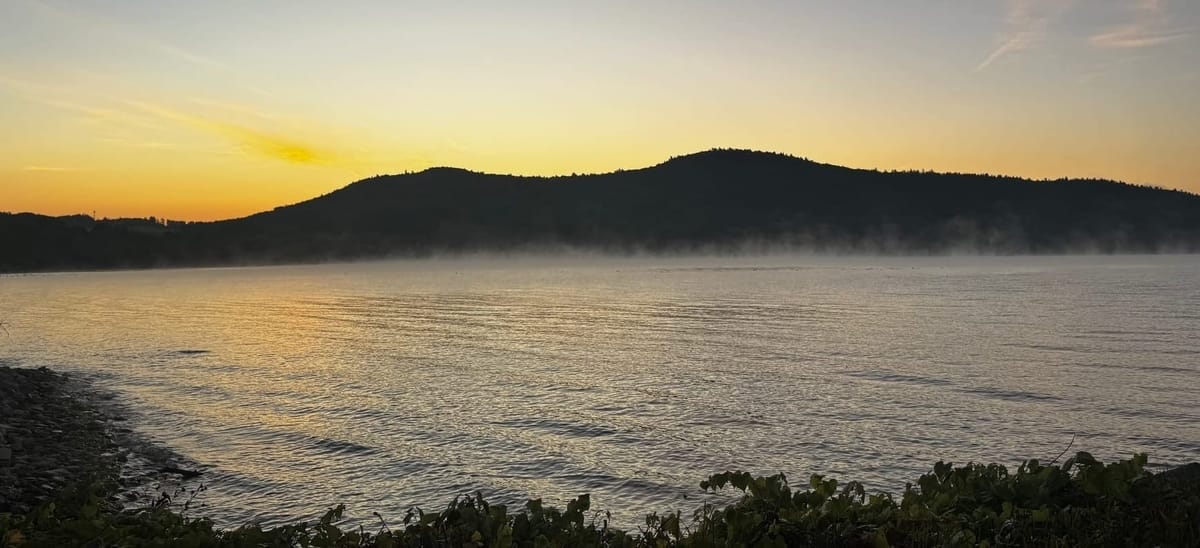
I've always been a bit leery of the hills I pass through up here. I'm a suburban Midwesterner at heart, so my concept of "rural" was flat, depressing farmland - cornfields, soybean fields, and more cornfields. Maybe some wheat if you're lucky. Moving to upstate New York, then, was less living in the halcyon myth of the American center, and more being constantly reminded of its shadow's weight. Upstate New York, excluding places with outside draws like Cooperstown, is undergoing the slow, agonizing asphyxiation dealt to rural communities by industrialization, new and old. A place where railways, pavement, phone lines, and cell towers don't reach is a place modern economies only care about for its material value - to the rest of the world. Even the Empire State isn't immune. It's on my mind often, the slow churn - investment out, jobs out, people out. A contemporary cycle known by many a small town American. Despite this, I've found a home up here, at least for now. I am nowhere close to a local - I'm a Chicagoan transplant - but I feel an welcoming authenticity to these hills that I haven't felt in many other places in America. Cliché as it may be, the hills do not care where your story started, and, like the Lake Shore Limited, mine started in Chicago and went out east.
Mornings like this make me feel like a polite intruder to an idyllic landscape. The sun softens everything - the new paint on our garage walls, the "For Sale" signs littering the roads and streets, the people going to and fro the center of town. There's something of a rhythm to these small towns that doesn't show up in data; the knowing nod of acknowledgement between neighbors, the smell of wet leaves floating over the water, the distant rumble of a diesel truck delivering propane to remote houses, the way fog lingers around the northern parts of the lake like an old habit. That rhythm is, in a way, its own economy, but it can't always be traded with a catchy ticker. The market doesn't read their ledger either.
Cities to me feel like massive machines, towering constructs of human societal ingenuity and coordination. In that way, the comparatively empty hills up here feel like that machine without facades; nature is its own machine, not of our design, and it tends towards candor more so than us. The only thing that breaks up the trees you see enveloping the hills around here are the occasional power line or cell tower. They're certainly there - you can see the dim red blink of cell towers near the tops of the hills when it's dark enough out. There's something of a disagreement between such fixtures of modernity and the environment they're in. These facilities, assets to companies and interests far from here, serve purposes far beyond our town. Connectivity arrives as throughput, not reciprocity. They may remind us of their presence from time to time, but not of what passes through them: gossip, favors, a thousand small acts that keep a rural community afloat when big interests moves on. A financial model may term this "decline." Richfield Springs residents call it Wednesday.
Living among all of this as the Midwestern transplant I am feels wrong, feels performative, in a sense. I keep waiting to feel like I don't belong, like I've wandered into a living room mid-conversation and stood too long at the doorway. But the lake does not ask you where you've been or where you came from. The hills do not ask for auditions to behold their beauty. In that patience I've started to feel a stubborn, almost spiteful kind of hope - the kind that doesn't announce itself, doesn't brand itself, doesn't show up as a trending topic on TikTok or Instagram. It just sort of materializes one cold September morning, warming the mist, and asks you to carry your share.